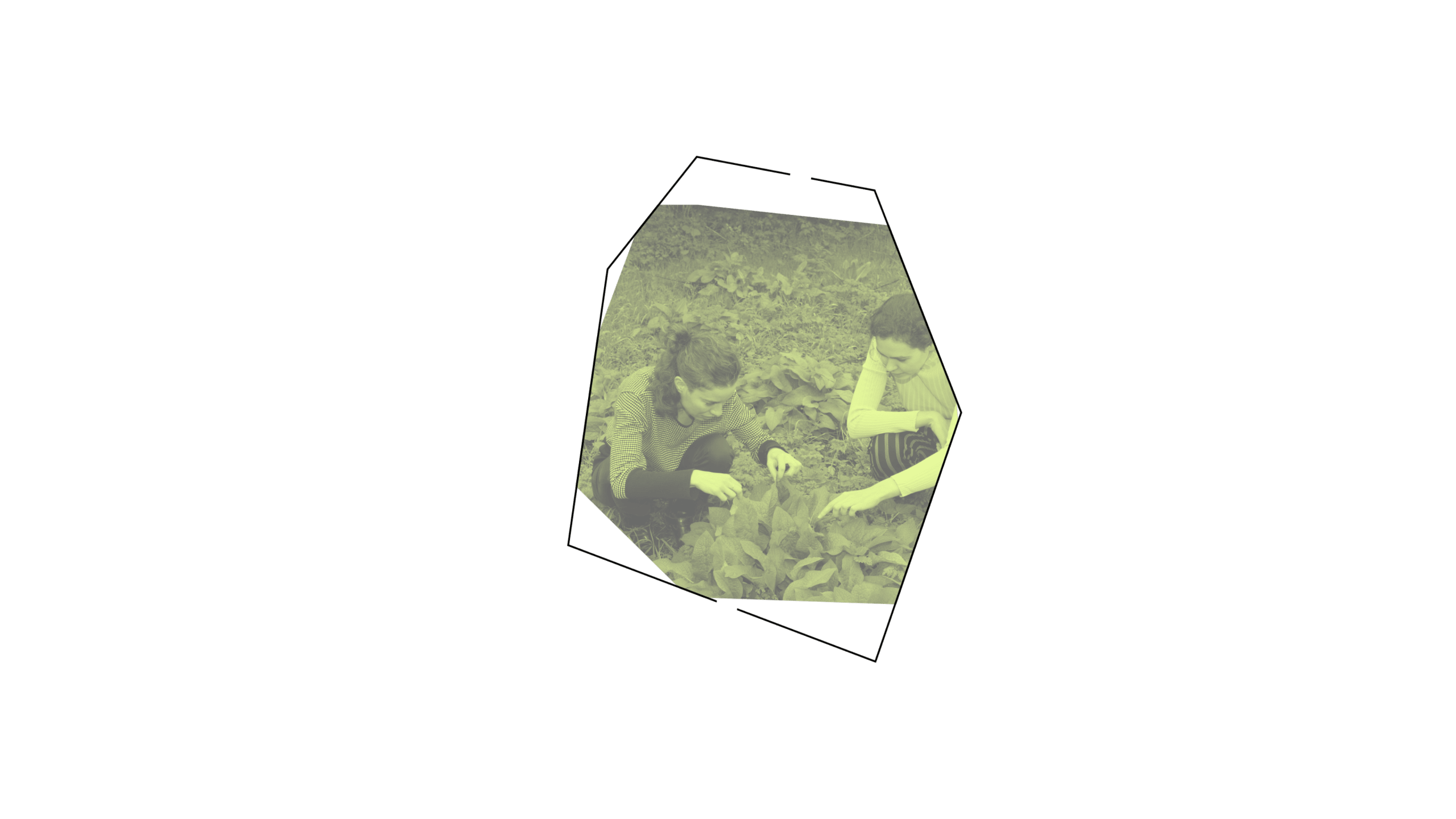

Our purpose is to support those most affected by environmental injustice to lead research, and shape their local ecosystems.
Lower-income communities and people from global majority backgrounds are disproportionately affected by climate change and are often excluded from decisions that shape their environment — inequities rooted in a long history of colonialism and racism.
We trust that those with lived experience of environmental injustice are the experts in imagining solutions that directly address their needs and create conditions for wider change.
We value collaboration, dialogue and joy, and work in the spirit of mutuality with our grantees and with non-human species, listening to and learning from them.
Afield aims to address environmental injustices driven by structural inequalities in urban planning, land use and development. These failures result in biodiversity loss, degraded habitats, poor physical and mental health, and increased climate vulnerability, all of which disproportionately affect low-income communities.
Afield will be launching the first round of its wilding grants in London in autumn 2026.
Afield responds by funding and supporting individuals with ideas for transformative community-led urban wilding, providing up to three years funding alongside mentorship, skills-building and networks. Our philosophy is rooted in mutuality: encouraging partnerships between humans and nature, supporting shared ecological spaces, and promoting reciprocal investment in ecosystems.
Afield provides grants to artists on low incomes, whose research contributes towards ecological knowledge and justice.
Afield will be launching the first round of its arts grants in London in winter 2026.
Afield's art programme supports artist research focusing on ecological care, interconnection, imagination, and repair. We seek to nurture excellence in the arts and demonstrate the value of artistic contributions to ecological justice, publishing and sharing artworks that challenge failed ecological models and help create futures everyone can live in. Artists make a vital contribution to ecological research — they can work outside of, across, with, and against traditional disciplines, developing ideas that go beyond established scientific, technical and cultural frameworks. Afield is committed to bringing under-represented voices to ecological research.
The way we work is as important as everything that we do.
We embrace risk and challenge orthodoxy. We take clear positions and back the individuals and ideas we believe in, even when it's uncomfortable. We support communities to be bold too — treating every outcome as learning.
We understand care as a practice — of attention, of relationships, and of responsibility. We aim to extend that care to our grantees and beyond — to non-human life, to land, and to the health of communities and ecosystems.
We take and support creative action. We stay curious, make space for the unexpected, and trust the process of not-knowing.
Justice shapes how we work. We ask who benefits, who is missing, and what is fair, and we aim to hold ourselves accountable to those questions.
Liz is a visual artist with a background in education and participatory arts. She worked as a Lecturer in Photography at London College of Communication, and as an Associate Artist with Performing Medicine, and has led participatory photography projects for PhotoVoice, the Photographers' Gallery, The Refugee Council and other community organisations.
Her artistic practice centres on archives and found images, considering the tensions in the production of knowledge and its circulation. Her practice has been supported by several grants including from the Mead Fellowship, Wellcome Trust and UCL Grand Challenges.
In 2019 she was diagnosed with M.E., became unemployed and spent five years often bedbound and housebound. Improvements in health enabled her to co-found Afield from a family legacy in 2025. She lives a sometimes life – sometimes active and sometimes in bed.
Mike is an entrepreneur, technologist and trustee, interested in the way that communities are impacted by, and respond to environmental crises. He founded community platform Commonplace, helping councils and developers to engage and co-design with over 12M local people. Commonplace data consistently shows nature and green space to be amongst the top two priorities for urban communities. Mike is also deputy chair of Trinity College London and a trustee of Open City, which amongst other things runs the Open House Festival. He previously led digital at Kew Gardens, was a member of the Speaker's Advisory Committee on Public Engagement at Parliament, ActionAid's digital board and worked in government and broadcasting. He has a design MA, and trained as a software engineer.
Joana is a programme manager with an environmental justice background. She has designed and delivered placemaking and education projects that create positive social and environmental impact, both in the UK and Portugal. She is also a community gardener and nature educator.
Or drop us an email at hello@afield.org.uk
Last updated and approved: March 2026
Afield Environmental (“Afield”) is a Charitable Incorporated Organisation, registration number ZC041916, referred to in this policy as “we”, “us” or “our”.
Afield is committed to protecting and respecting your privacy. This policy covers data we collect from you during the course of our operations, including from our website at www.afield.org.uk. It explains how any personal data we collect from you, or that you provide to us, will be processed by us. Processing of data includes storing it. The policy should be read alongside our website Cookie Policy.
Personal data means any information about a living individual from which that person can be identified (but not data where the identity has been removed, like anonymous data).
This policy is not intended for children, and we will not knowingly collect personal data relating to anyone under the age of 18.
We keep this policy under regular review and we may amend it from time to time to comply with law or for legitimate business purposes. Any future changes we make to this policy will be posted on our website and, where appropriate, notified to you by email. The most recent date it was updated is shown at the top of the policy.
Contact Details
Please read the following carefully and, if you have any questions regarding your personal data or its use, please contact us:
Introduction
For the purposes of the Data Protection Act 2018 we are the controller of the personal data we collect for certain purposes as described in this privacy policy.
Afield is registered with the Information Commissioner’s Office (ICO), the UK regulator for data protection issues (www.ico.org.uk) with registration number: C1827123. You have the right to make a complaint at any time to the ICO. We would, however, appreciate the chance to deal with your concerns before you approach the ICO so please contact us in the first instance.
What we do as a charity and why we do it
We want to be really clear about what we do and why we do it, because it sets the scene for how and why we collect and process personal data. Afield aims to respond creatively to environmental injustice by working with communities to rewild urban spaces; and supporting artists to undertake environmental research.
Where necessary we will collect and process personal information to enable us to: assess and award grants; provide access to restricted areas of our website; work with partners and individuals; and share information about the projects and campaigns that we are running. You can find more detail on what information we collect and how we use it below.
How we collect information
We collect data from you in a number of different ways, depending on how you interact with us. For example we may collect data from you:
Information we collect and why
Data: Your contact details including email addresses, names, telephone number, organisation and job title (if relevant).
When: When you provide information to us, for example: at an event, via email, or via a form on our website.
How and why: To analyse interest in Afield, and contact you about events you have expressed interest in.
Lawful basis: Consent — you will be asked to consent if you want to receive this information.
Data: Your contact details including email addresses, names, telephone number, organisation and job title (if relevant).
When: When you apply for a grant, funding or partnership.
How and why: To keep in touch with you during the progress of your application.
Lawful basis: Legitimate interest — it is in our legitimate interest to be able to stay in touch with our applicants and partners.
Data: Your protected characteristics (for example your gender, your ethnicity, or any disabilities that you might have).
When: When you apply for a grant, funding or partnership, in line with our Equality, Inclusivity and Diversity Policy.
How and why: Afield may use this data in order to take positive action in grant awarding decisions, in line with our Equality, Inclusivity and Diversity Policy.
Lawful basis: Consent — we will only use these characteristics with your explicit consent.
Data: Your self-assessed income level.
When: When you apply for a grant, funding or partnership.
How and why: Some grants are only offered to applicants who have self-assessed as being ‘low income’.
Lawful basis: Consent — you will be asked to consent when you provide this information.
Data: Your contact details including email addresses, names, telephone number, organisation and job title (if relevant).
When: When you are awarded a grant, or make a funding or partnership agreement.
How and why: To enable us to deliver our agreement to you as a grantee.
Lawful basis: Perform a contract — we need to do this to provide our obligations as a grant maker, funder or partner.
Data: Your identity, contact data (email address and/or password), technical data, profile, usage, marketing and communications and technical data.
When: When you use the services on our website. For example if you log in to a protected area of our website.
How and why: Your email address is our primary method to identify you in order to provide this access.
Lawful basis: Consent — you will be asked to consent when you provide this information.
Data: Your identity, contact data, email address, technical data, profile, usage, marketing and communications and technical data.
When: When you subscribe to news, blogs, newsletters or contact emails.
How and why: To provide you with information that you request from us (for example, notification of a new news post).
Lawful basis: Consent — where you have consented to receiving communications.
Data: Your identity, contact data, email address, technical, usage and profile data.
When: When you use a form on our website or send us an email to provide feedback or raise a complaint.
How and why: To deal with feedback or complaints about our website or service.
Lawful basis: Legitimate interest — it is in our legitimate interests to deal with feedback and complaints.
Data: Your identity, contact data (email address and/or password), technical data, profile data, usage, marketing and communications and technical data.
When: When you use the services on our website.
How and why: To respond to law enforcement or regulators about users of our site.
Lawful basis: Legal or regulatory obligation — we need to do this so that we do not break the law.
Our lawful bases of processing
Special category data
Special category data is sensitive personal data that requires greater protection and includes information about racial or ethnic origin, political opinions, religious or philosophical beliefs, trade union membership, genetic data, biometric data for unique identification, health data, and data concerning a person’s sex life or sexual orientation. Afield may collect and use special category data for evidence-based, proportionate targeting of certain grants.
Keeping personal data secure
We have taken all appropriate technical, physical and organisational security measures to ensure that your data is protected against unauthorised access, use and disclosure. Unfortunately, the exchange of information via the internet is not completely secure. Although we will do our best to protect your personal data, we cannot guarantee the security of your data transmitted to our sites; any transmission is at your own risk.
If you are invited to choose a password (for example to access part of our website), you are advised to choose a non-guessable password and you will need to follow the password rules which are outlined when you create your account or change your password.
The servers where we store personal data are located in the UK. If we ever need to transfer personal data outside of the European Economic Area, we will take all steps reasonably necessary to ensure that your data is subject to appropriate safeguards, such as relying on a recognised adequacy decision or standard contractual clauses, and that it is treated securely and in accordance with this privacy policy. If you would like more information about these safeguards, please contact us at privacy@afield.org.uk.
Disclosure of your information
We may disclose your personal information to any member of our group, which means to any subsidiaries, any ultimate holding company or its subsidiaries. We may disclose your personal information to third parties, including:
Links to other websites
Our website includes links to other websites which we may not control. We cannot be responsible for the protection and privacy of any information that you provide while visiting those sites. These links are not an endorsement by Afield of the site to which it points, and they are not governed by this policy. When you leave our website, we encourage you to read the privacy policy of every website you visit.
How long we keep your information
We will only keep your information for as long as necessary to carry out the purposes for which we collected it. This will depend on the type of information and the types of legal and contractual obligations we must comply with. In the normal course of our activities we will not keep personal information that has not been used for more than 12 months.
Your rights
Under the General Data Protection Regulation you have the following rights:
Not all of these rights will be relevant to your interaction with Afield, but they are important rights and we want to make sure you know about them. If you wish to exercise any of the rights set out above, please contact us at privacy@afield.org.uk.
When you contact us, on privacy@afield.org.uk or via other means, we need to be sure it’s you. We may need to ask you to confirm your identity — this is an important security measure so that we don’t disclose personal data to any person who doesn’t have the right to receive it.
We try to respond within a month (30 days), but if your request is complex or you’ve made a number of different requests, it may take us longer. If that’s the case, we’ll keep you updated. Normally we do this work without charge, but if a request is unfounded, repetitive or excessive in our view, then we reserve the right to charge for producing the data. Alternatively, we could refuse to comply with your request in these circumstances.